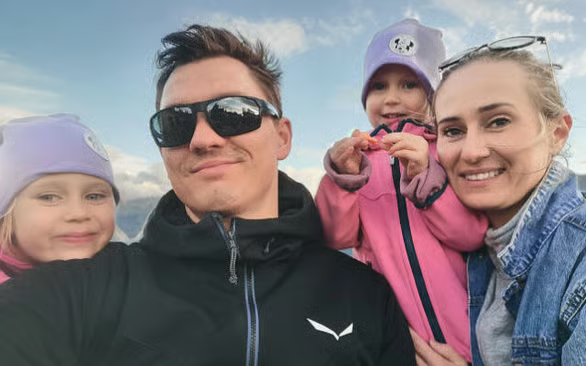
Before we tell you about the app, we want to tell you about Sławek.
He grew up surrounded by people, ideas, and languages. By adulthood he spoke several of them fluently, and moved between them the way most of us change topics. He was the kind of man who filled a room - warm, sharp, opinionated about the things that mattered, generous about the things that didn't. He had work he loved, family he was building a life with, and a future he was leaning into.
Then came the accident.
The accident happened on the 3rd of May, 2025. Sławek was in a vehicle accident, and he is very lucky to be alive. His heart stopped at the scene. If it weren't for the people who witnessed it and started CPR immediately, he would not be with us today. We owe everything that has happened since to those strangers.
What the doctors told us afterward was the part we couldn't hold in our heads at first: his body was paralyzed, completely, and would need a ventilator to breathe. But his mind was intact. Every memory, every language, every sense of humor - all still there, all still him - just with no way out.
First, silence
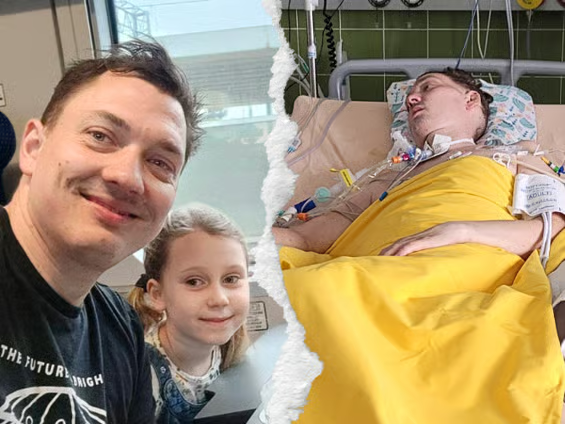
The first weeks were the hardest. Everyone around him needed to know whether he was really there - whether the man we loved was still inside the body that no longer responded. We started with the simplest tests we could think of.
"Two plus seven."
He blinked nine times.
We tried harder questions. For two-digit answers he blinked each digit in turn, with a pause between - one blink, pause, five blinks for fifteen. He didn't make a mistake.
He was there. All of him.
From then on, we used yes-or-no questions to talk to him - one blink for yes, two for no. It was something. It was nowhere near enough. Knowing he was still with us was the moment we realized we had to find a real way for him to speak.
A whole life was happening inside him with no way to come out. Family conversations went on around him while he listened, present and powerless. The hardest part wasn't the silence itself. It was knowing how much he had to say.
Building him a voice
That's where the app started. Not as a product, not as a company - as a quiet promise to one person.
The first version had only a caregiver mode. One of us would show Sławek letters, watch for blinks, and try to guess the word from the first couple of letters before he had to spell the rest. Then we'd piece the words into a sentence and read it back to him to confirm. It was slow. It was tedious. But it was the first time in weeks he could say things that weren't a yes or a no.
Then we added eye-tracking. Off-the-shelf solutions didn't work for someone like Sławek - they expect steady, precise gaze, and his eyes don't always cooperate. So we built our own. Every glance snaps to the nearest button. Small involuntary movements are filtered out. The system reads intention, not perfection.
Now he could look at the letters himself, one at a time, without anyone in between. The first thing he wrote that way was four words, to his daughter Marci.
"I love you, Marci."
After that came the AI. The app builds something like a digital twin for each person who uses it - a quiet picture of how they speak, growing more accurate the more they use it. The words they reach for, the phrases they use with family, the languages they switch between - it all goes in. We didn't build this only for Sławek. We built it so anyone using the app gets the same thing he does.
The more you use it, the better it knows you.
For Sławek today, the prediction gets it right 60 to 70 percent of the time from the very first letter. What used to take minutes now takes seconds. Saved phrases handle the things he says often. Caregiver mode is still there for the moments he prefers to just confirm with a blink. Tracking stays sensitive enough to keep working even when his eyes are tired.
Every change came from him. We'd build something, watch him use it, and learn what to fix. He was the first user, and still the only user we built every detail for.
A day with Sławek now
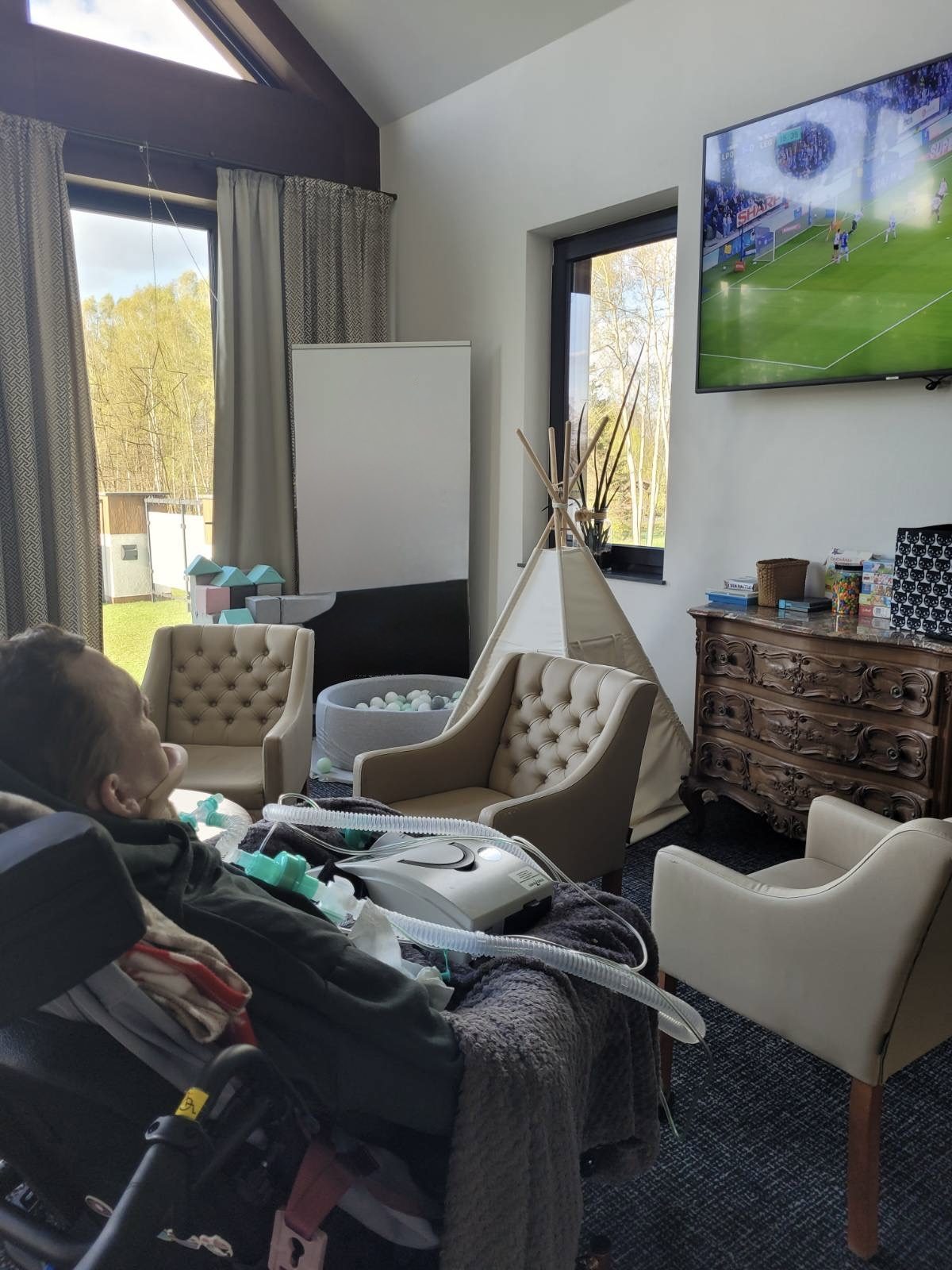
Most days now end the same way. The room quiets down. Someone props the iPhone or iPad where he can see it, the camera finds his eyes, and Sławek starts to speak. Sometimes it's an opinion he's been waiting all day to share. Sometimes it's a question for one of us. Sometimes it's just thank you or I love you - the things that, before, lived only in his eyes.
Communication still takes effort, but the words come fast now. The prediction model knows him - what he calls things, the phrases he uses with each of us, the languages he switches between. Most sentences land after a letter or two. After weeks of being heard only through guesses and blinks, the speed at which he can finally say what he wants to say has changed everything.
A voice for others
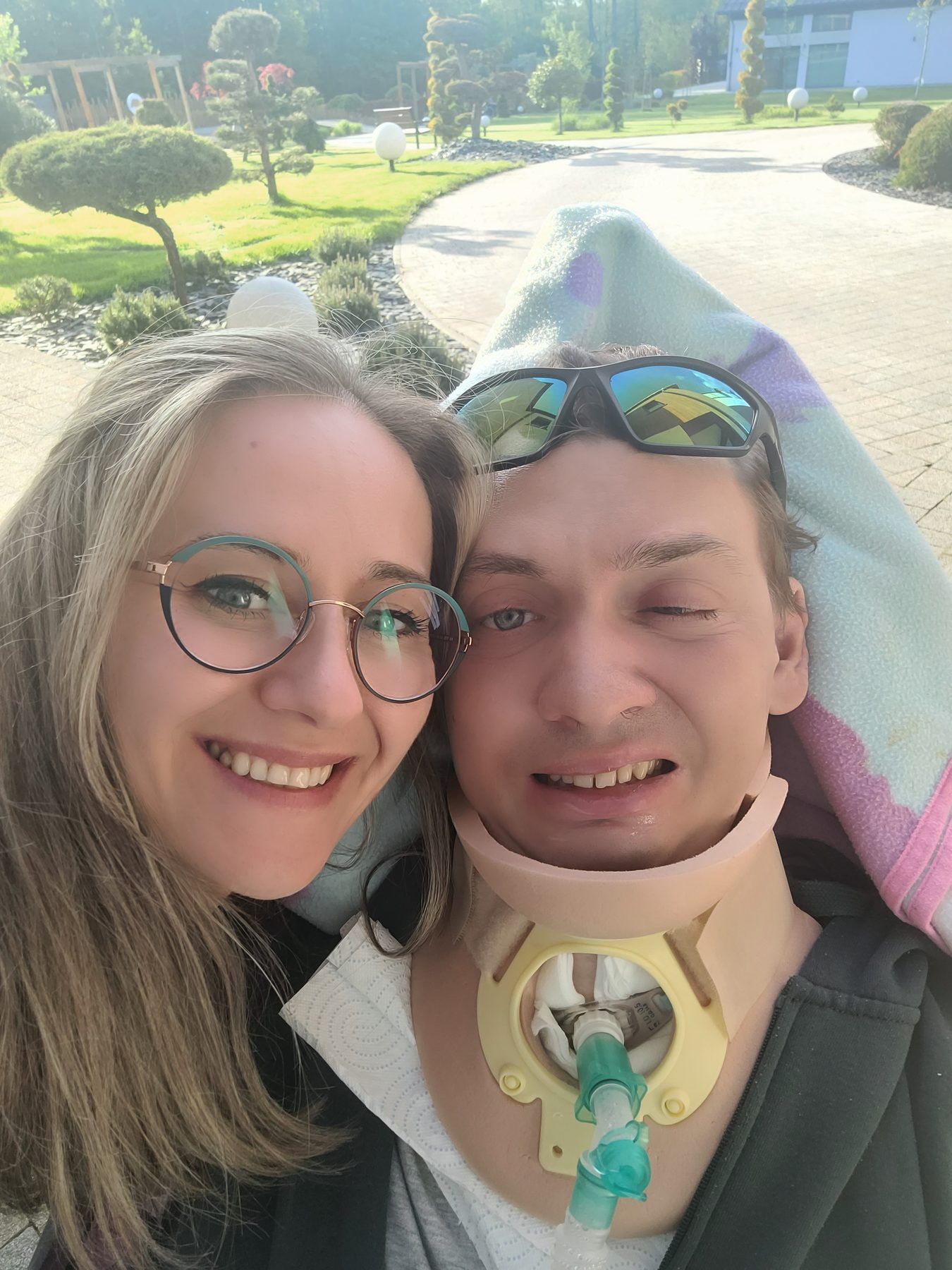
Sławek is one of many. Across the world, people living with ALS, locked-in syndrome, severe stroke, brain or spinal injury, late-stage muscular dystrophy all face the same wall he faced. Their minds are intact. Their love is intact. The way out is what's missing.
We built I Have A Voice for Sławek. We're sharing it because there is no reason it should help only one person.
If you know someone who can no longer speak with their hands or their voice but can still see and signal with their eyes, we hope this app can help them say what's been waiting inside.